What makes it sticky?
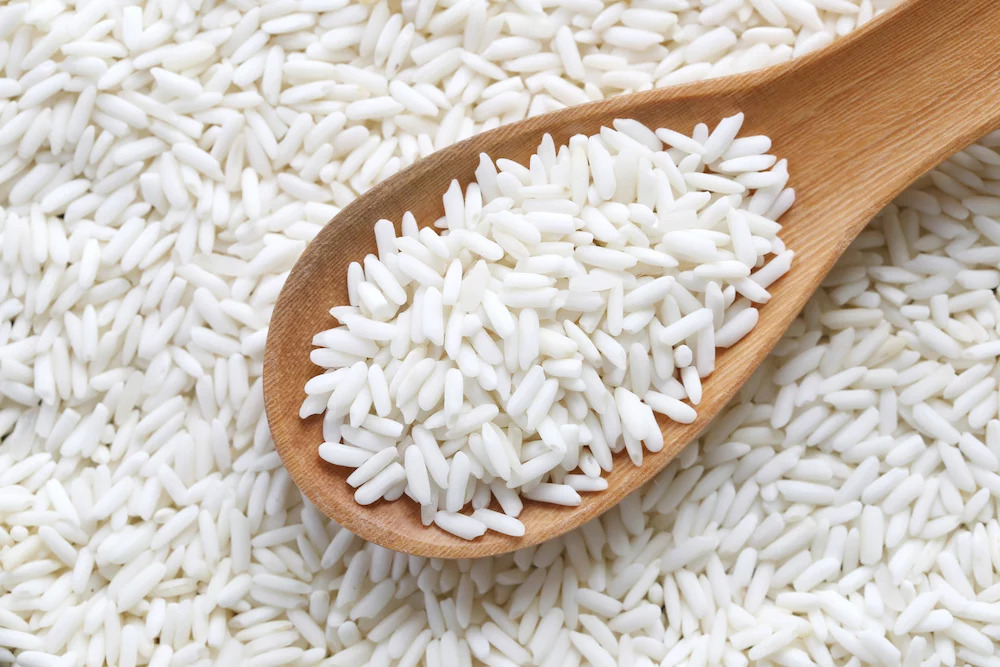
Unlike classic white or wholegrain rice, sticky rice has a much higher starch content containing unusually high amounts of amylopectin and a very low amount of amylose. The high amylopectin in this case is what gives it its ultra-sticky quality.
Types of sticky rice
Grown mainly in Southeast Asia, it’s a staple ingredient in many dishes across the globe. Sticky rice can come in both long-grain and short-grain varieties and there are three main types to note.
Japanese sweet rice
A sweeter, shorter white grain that has a variety of uses. This rice is most commonly used for making sweet desserts like mochi and wagashi. Keep in mind, Japanese sweet rice is not the same as Japanese short-grain rice, which is used in dishes like sushi, onigiri and as a general Japanese meal staple.
Thai sticky rice
A long-grain, fragrant variety that comes from Northern Thailand and Laos and is a main staple of their cuisine. It works excellently across both savoury and sweet dishes.
Black/Purple sticky rice
This is your wholegrain variety. With a vibrant, purple colouring when cooked and a deliciously nutty flavour, this is quite common across Thailand, Malaysia and Indonesia.
How to make sticky rice at home
When it comes to making sticky rice, you’ve got a few choices. But, regardless of the method you go for (except the Instant Pot method), be sure to soak your rice – ideally for four hours and up to overnight if you can – then drain the water and rinse. This process softens the outer shell, resulting in a well-cooked, fluffier grain overall.
 F&D AGRO INTER CO., LTD.