Wild rice is one of my favorite whole grains to cook in the fall. Its chewy texture and nutty flavor make it a perfect partner for seasonal produce like sweet roasted squash and earthy root veggies. Because I’ve found myself preparing it a lot lately, I thought I’d take today’s post to give you some background on it. I’m also sharing a foolproof stovetop cooking method and some of my favorite wild rice recipes.
What is wild rice?
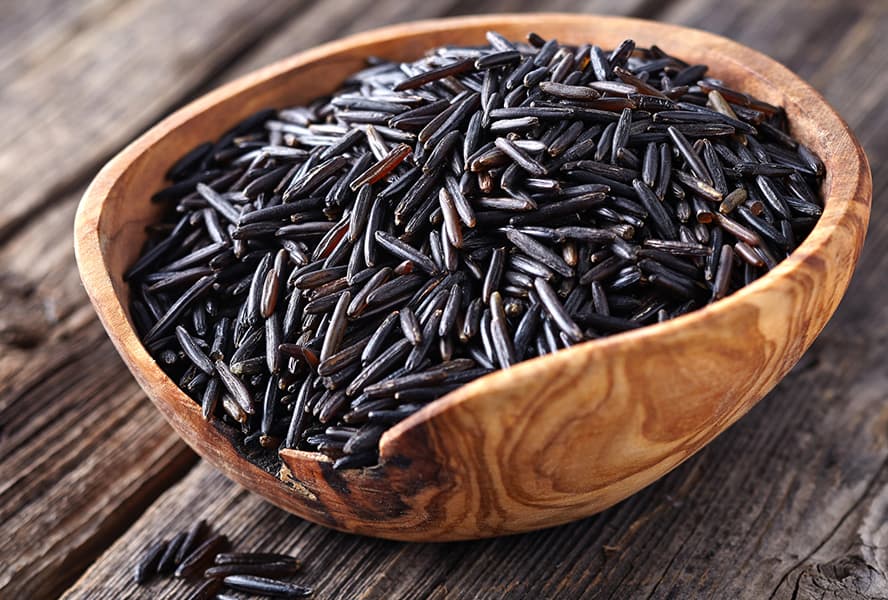
You might think, given its name, that this whole grain is a relative of the white or brown rice you’d find alongside it at the grocery store. In fact, wild rice isn’t rice at all, but a type of aquatic grass. It is indigenous to the Great Lakes region of North America, where it grows naturally in freshwater lakes and waterways. Today, it is also cultivated commercially in the United States and Canada.
How to Cook Wild Rice
Hand-harvested wild rice can be light or dark in color, whereas the cultivated kind is always dark brown or black. This cooking method will work with either type, but note that hand-harvested rice tends to cook more quickly. Depending on the variety, it might be ready in as little as 20 minutes, whereas the cultivated wild rice you’d find at the grocery store will likely need 50 or more.
- Start by bringing a medium pot or saucepan of water to a boil. No need to worry about a specific rice-to-water ratio for this recipe. We’re going to use what I call “The Pasta Method,” which just means that we’ll cook the rice in a pot of boiling water. While the water comes to a boil, place the rice in a fine mesh strainer and rinse it well.
- Then, add the rinsed rice to the boiling water. Reduce the heat so that the water maintains a gentle boil. Simmer until the rice is tender but still has a slight bite, typically 35 to 55 minutes, though the cooking time could be more or less depending on your rice. Some of the grains will start to split open slightly.
- Finally, let the rice steam. Drain off the liquid, return the rice to the pot, and cover it with a clean dishtowel. Place the lid on the pot, and allow the rice to sit for 10 minutes, becoming fully tender and fluffy.


 F&D AGRO INTER CO., LTD.